
Bi-Weekly Personal Budget Template
A bi-weekly personal budget is a plan that takes you into account to collect a paycheck every 14 days. Some of them are weekly, monthly, and twice per month. Both twice-per-month and bi-weekly budgets are a little different from each other as the number of overall paychecks for a year varies. Creating a bi-weekly personal budget may burden you but, in this article, we have a sample of a bi-weekly personal budget template that assists you to start confidently.
Importance of Bi-Weekly Budget Plans

Download Size: 39 KB
Bi-Weekly Personal Budget TemplateIt is difficult for those who receive a two-week income to keep their spending on track to avoid extra charges and a ballooning credit card bill. It's also worth mentioning that you should have emergency funds for at least one salary in case things go a little messy. Keeping track of your actual personal expenditures can help you save money for that dream vacation you've always wanted.
Free Bi-Weekly Personal Budget Template
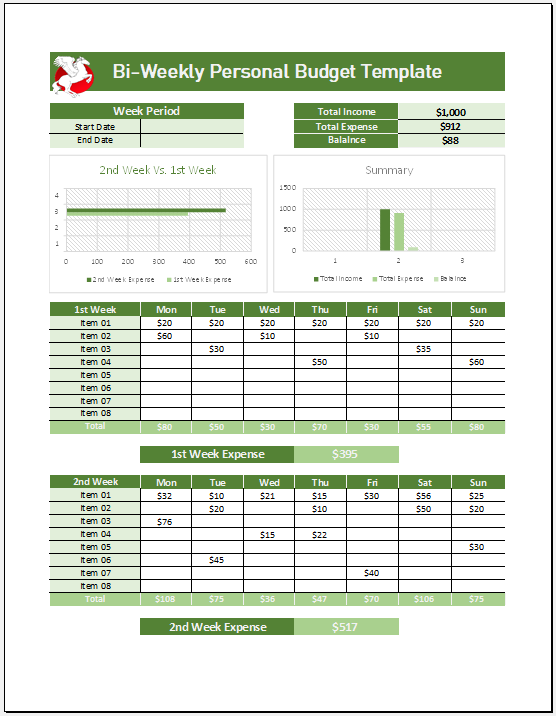
This is an example of the generic bi-weekly personal budget planner. Using it in an MS Word file, you can keep yourself on track with your two-week income towards your expenses. It allows you to manage your expense values for each category and provides you with a total of them automatically. Just insert your right expense values in the cells and see an outcome of your income and expense in the summary and the charts as well. However, download this accessible version for free by clicking on the button featuring this sample image.
How to Prepare a Bi-Weekly Personal Budget?
Budgeting your bi-weekly or two-week wages is not easy, but it can be done well if you follow the procedures given below:
- First, identify your expenses and divide them in two. These will be your measurements for what you need to pay.
- Determine your bi-weekly income towards expenses related to your needs. Such as housing expenses, food expenses, transport expenses, etc.
- Always leave some of your money for an emergency fund for facing future financial crises. If you still have money after a month, you can increase your amount.